
Composite Decking
Low-maintenance composite decks that stand up to salt air, strong sun and termites, with hidden fixings, matching fascia boards and stairs.
Learn More →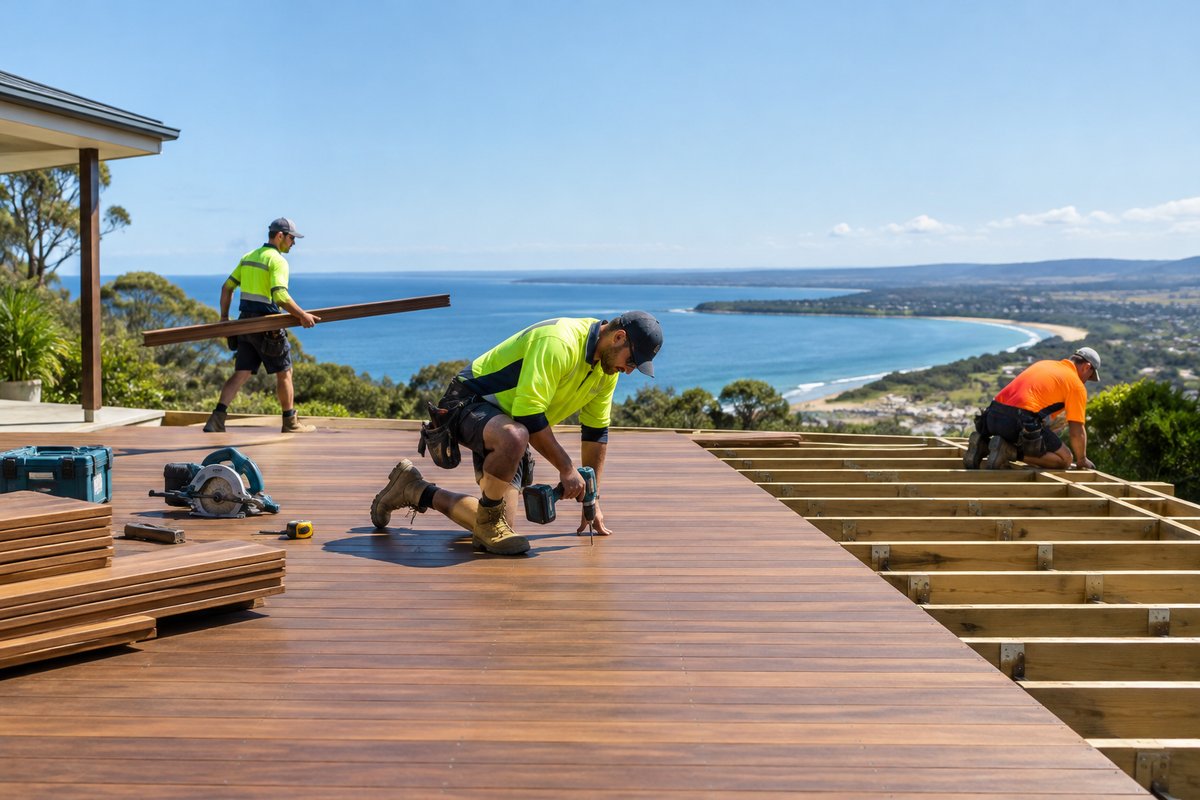
Removing tired, rotting or unsafe decks and rebuilding them properly, often larger and in longer-lasting materials than the original.
Request a Quote
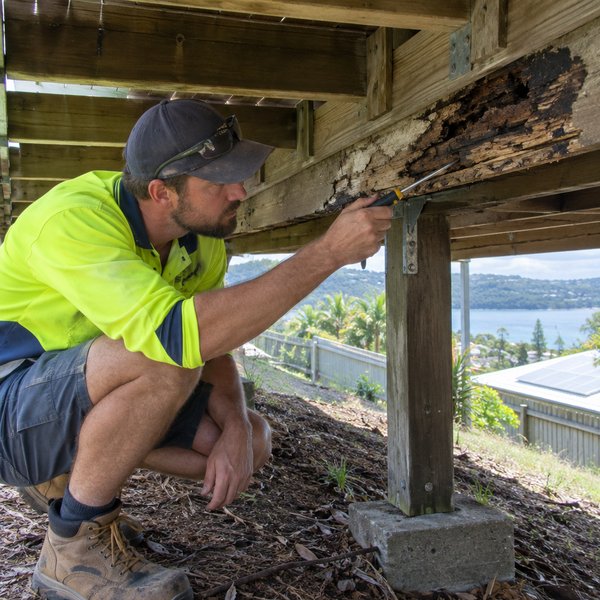
Most old decks we see have looked tired on top for years, but the real problem sits underneath. Bearers go soft where water pools on top of them. Joists rot at the ends where they meet the house, and galvanised bolts and nail plates rust through in the salty air near the beach. When the frame is gone, new boards over the top won't fix it. We strip the deck back to the ground, check the footings and rebuild the structure properly before a single board goes down.
Conditions across the Central Coast are hard on timber and fixings. Humid summers and wet spells keep shaded subfloors damp, which feeds rot and termites. Houses near the water deal with salt spray that eats through standard fasteners. Sandy coastal soils and steep sloping blocks also mean footings need to be set for the site rather than copied from a standard plan. We frame with treated pine or hardwood suited to the exposure. We use stainless or hot-dip galvanised fixings where corrosion is a risk, and we keep ventilation gaps so the subfloor can dry out after rain.
A rebuild is also the right time to rethink the space. Plenty of owners keep the footprint and simply upgrade from weathered pine to composite decking or a hardwood like spotted gum, blackbutt or merbau. Others use the rebuild to widen the deck, add a second level down the slope or link it to the pool. If you want shade and somewhere to cook, we can design the new deck as part of a complete outdoor entertaining area with a roof, outdoor kitchen and landscaping, and manage the whole project ourselves.
From under-deck inspection to the final balustrade, here's what happens on site.
We get under your existing deck and probe the bearers, joists and posts for rot, termite damage and rusted connections. We check the footings, the ledger against the house and the balustrade fixings. From there we design the new deck, confirm your choice of materials and check whether the work needs approval through Central Coast Council or a private certifier.
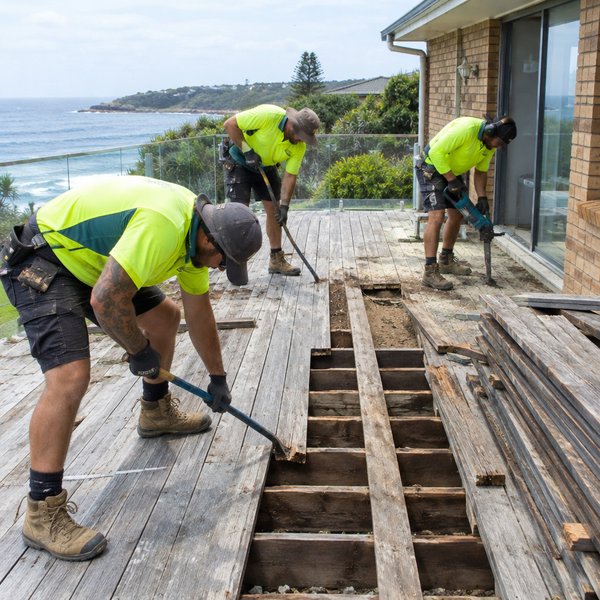
We strip the old decking boards, balustrades and stairs, then take down the joists and bearers. We protect the house wall, windows and nearby gardens while we work. Old timber and metal fixings are removed from site, leaving clear ground to rebuild on.
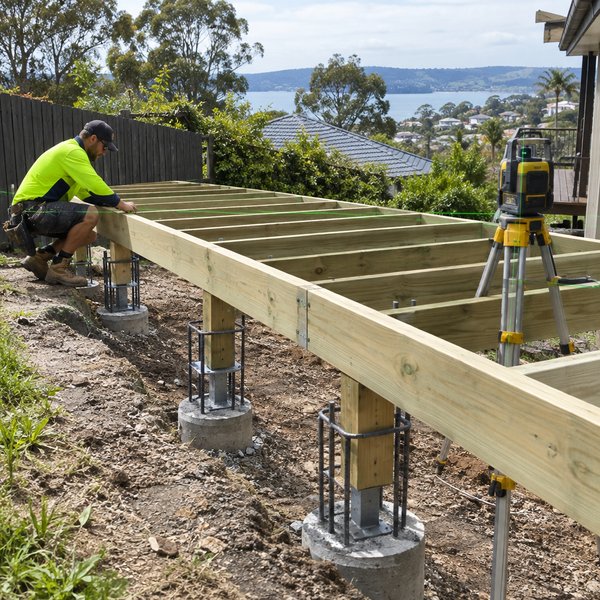
We set new concrete pier footings where needed and stand posts on galvanised or stainless stirrups to keep timber off the ground. Bearers and joists go in level and square, with spacing to suit the decking you've chosen. We fix and flash the ledger at the house wall so water drains away instead of sitting against the frame.
We lay the new boards with consistent gaps for drainage and airflow. Hardwood is pre-drilled and screwed, and composite goes down on its matching hidden clip system. Stairs and balustrades are built to current building code requirements, then we clean up and walk you through how to look after the new deck.
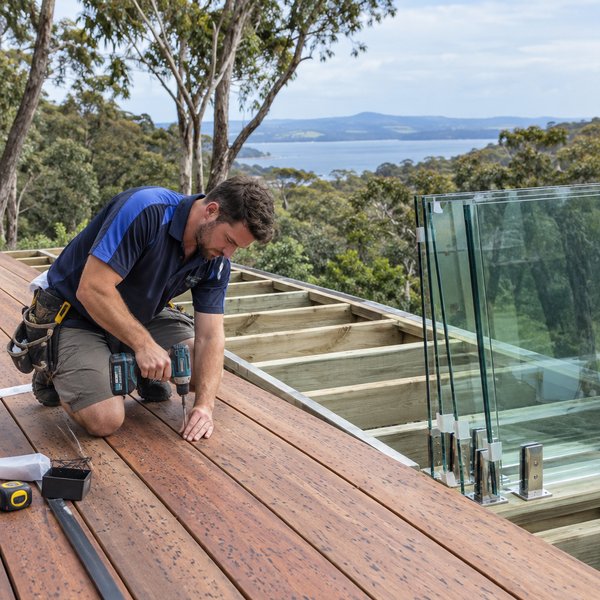
A sound structure, better materials and a layout that suits how you use the space.
Soft boards, wobbly balustrades and loose stairs are a real risk, especially with kids and guests around. A rebuild replaces the hidden structure as well as the surface, so the whole deck is sound again. You can host a full table of people without wondering what's happening underneath.
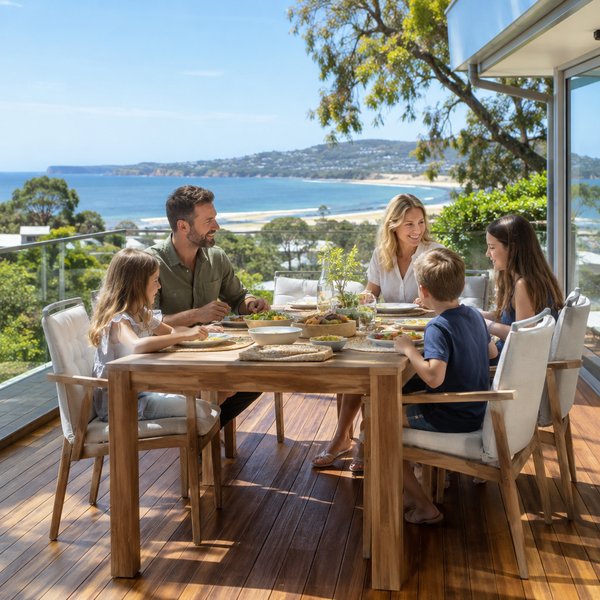
We match timbers, composite boards and fixings to how exposed your home is to salt, sun and damp. That helps slow down the rust, rot and cupping that wore out your old deck. Your new deck holds its shape and finish longer between maintenance jobs.
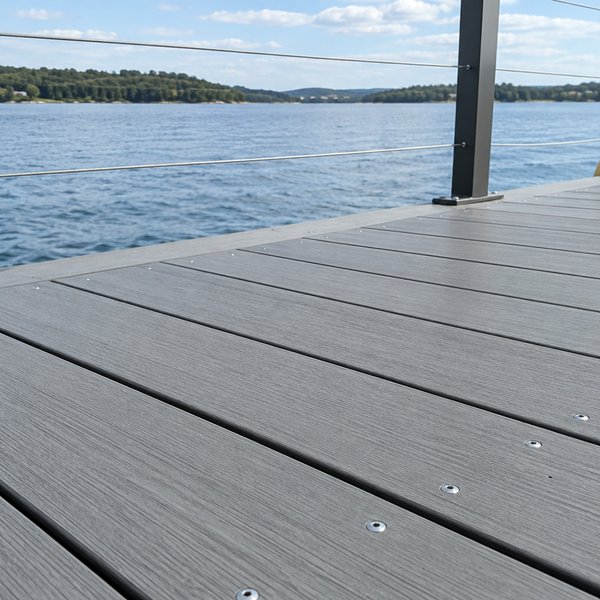
The old deck was often built for a different household or squeezed onto the block as an afterthought. A rebuild lets you fix awkward stairs, widen a narrow walkway or add space for a barbecue and dining setting. Many owners find the deck becomes the room they use most.
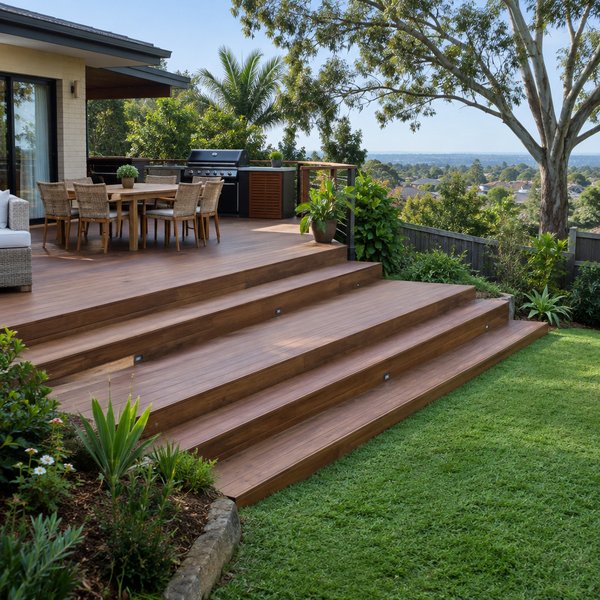
We fix the cause of the failure, whether that's rotted bearers, a poorly flashed ledger or footings sitting in wet sand. Recovering a failing frame with new boards just sets up the next failure, so we don't do it.
Steep blocks, sandy soils and waterfront exposure are everyday conditions on this coast. We design footings, post heights and fixings around your site so the new deck suits the ground it stands on.
We handle the design, approvals advice, demolition, framing, decking, stairs and balustrades ourselves. If you want a roof, pergola, outdoor kitchen or landscaping as part of the rebuild, we manage that too, so you deal with one builder.
We know how spotted gum, blackbutt and merbau move with the weather and how composite boards need to be spaced and supported. We'll explain the trade-offs honestly so you choose the right board for your home and how much upkeep you want.
Common questions answered
If the problem is a few cracked or cupped boards on a sound frame, a repair is usually enough. If you find soft bearers, joists crumbling at the ends, posts rotting at ground level, termite damage or heavily rusted bolts, the structure itself is failing. We inspect underneath and give you an honest answer on which applies.
Sometimes. Concrete piers in good condition can often stay, and occasionally a hardwood frame is sound enough to keep. We check every post and footing first, because putting new boards on a weak frame only hides the problem for a while.
It depends on the deck's height, size, distance from boundaries and whether your block is bushfire prone or heritage listed. Some like-for-like rebuilds fall under exempt development rules, while others need a complying development certificate or a development application. We check your site and tell you which path applies before work starts.
The main factors are the deck's size and height, how steep the block is, how many footings need replacing and your choice of decking material. Stairs, balustrade style, multiple levels and add-ons like a roof or pergola also change the price. We give you an itemised quote after the site inspection so you can see where the money goes.
Hose off salt and sand regularly and keep leaves out of the board gaps so water can drain. Hardwood decks need periodic oiling to keep their colour and stop surface checking, and we can handle sanding and re-oiling as aftercare. Composite needs less upkeep, usually just a wash with mild soapy water.
We provide Deck Replacement & Rebuilds throughout the Central Coast, NSW and surrounding suburbs.
Don't see your area? Contact us to check if we service your location!
View All Areas